Practical test
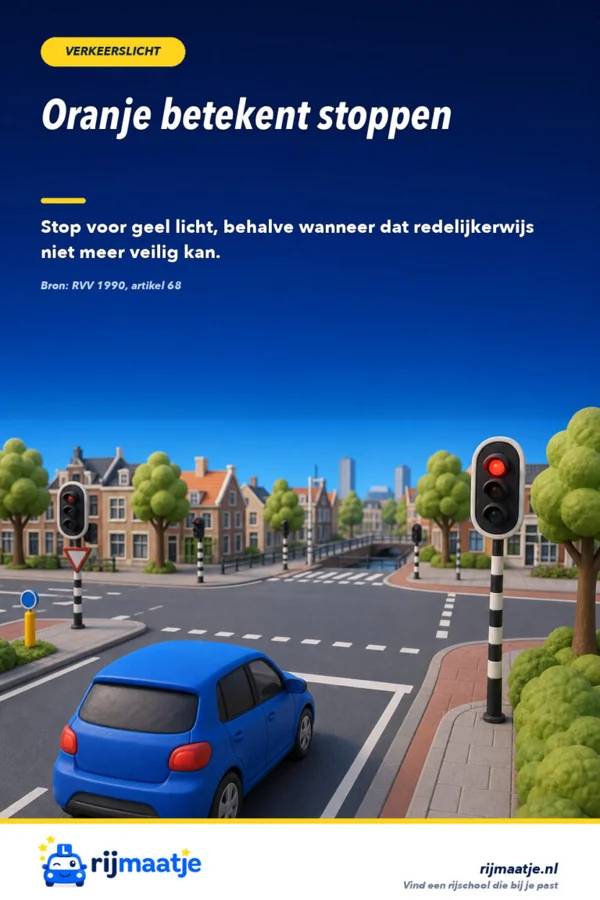
Do you always have to stop at a yellow traffic light?
Yellow means stop. Only when it is no longer reasonably possible to stop may you continue driving.
Read article
From your first lesson to driving independently. Explore practical articles about driving lessons, traffic rules and the journey to your licence.
150 articles54 articles
Yellow means stop. Only when it is no longer reasonably possible to stop may you continue driving.
Read article
In temporary situations, follow the yellow road marking when it does not match the regular white marking.
Read article
You must follow the instructions of authorised traffic controllers, even if a traffic light or sign seems to say something different.
Read article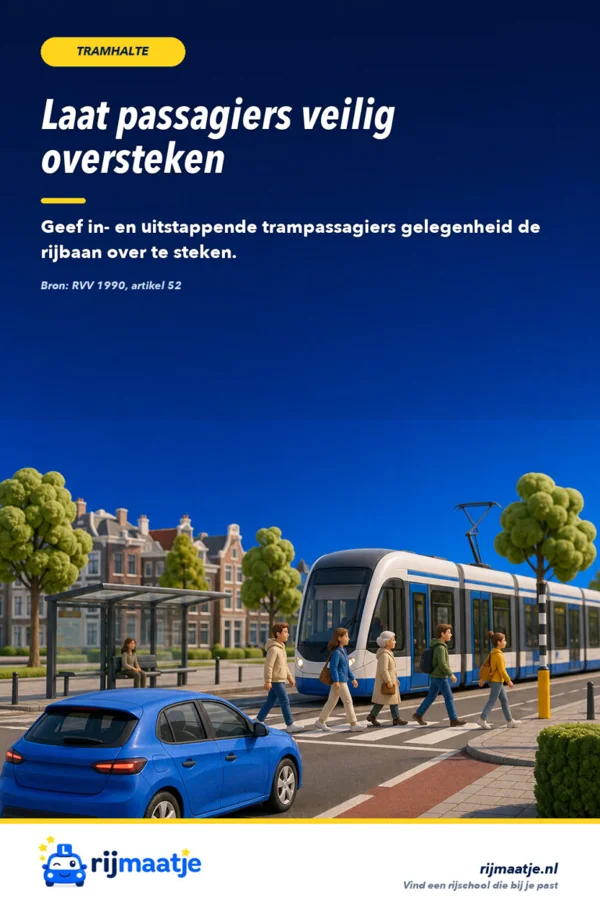
Drivers must give passengers crossing the roadway at a stop the chance to safely board or leave the tram.
Read article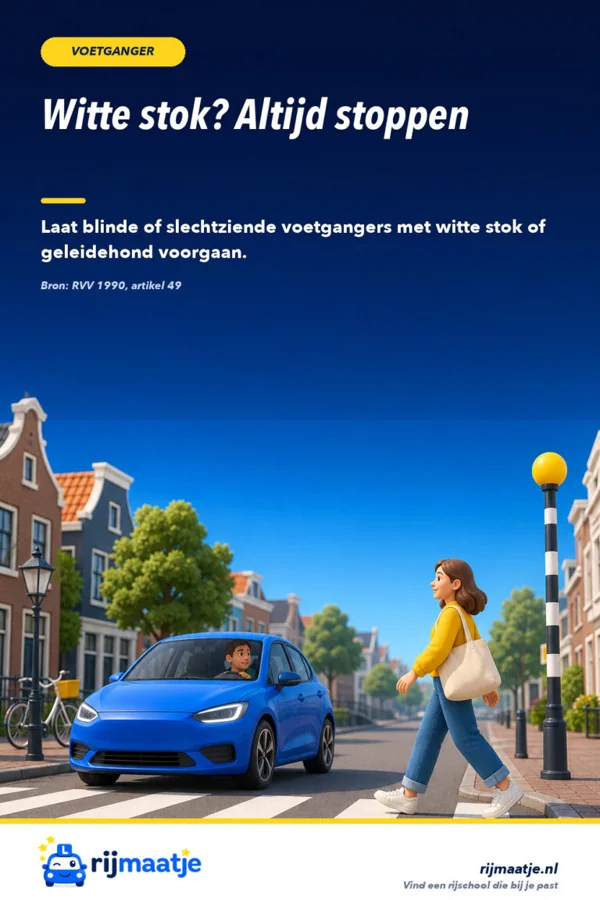
You must give way to blind and visually impaired pedestrians who use a white cane or guide dog.
Read article
Drivers must give pedestrians who have difficulty walking the opportunity to cross safely.
Read article
Within a built-up area, you must give a bus indicating that it wants to leave the stop the chance to pull away.
Read article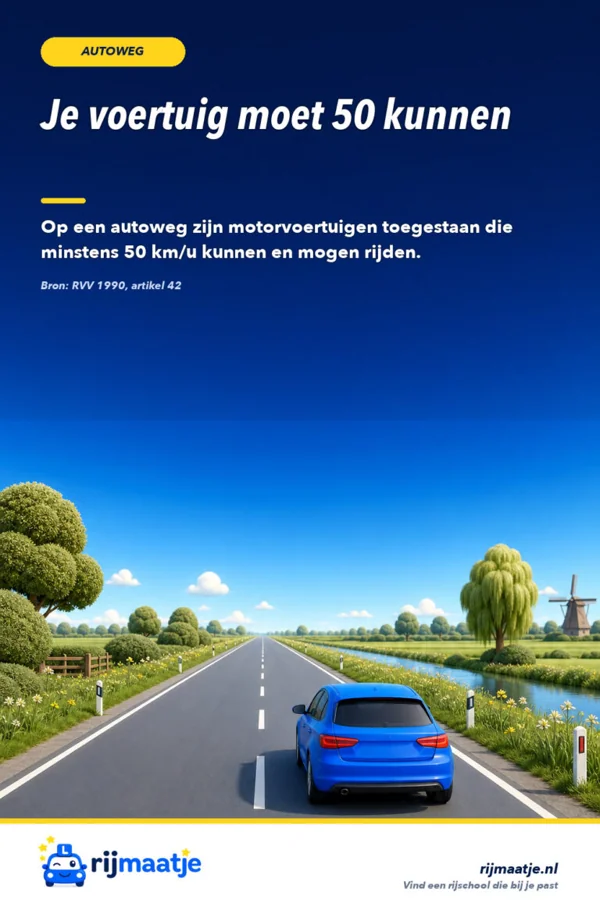
A main road is accessible to motor vehicles that are permitted and able to travel at least 50 km/h.
Read article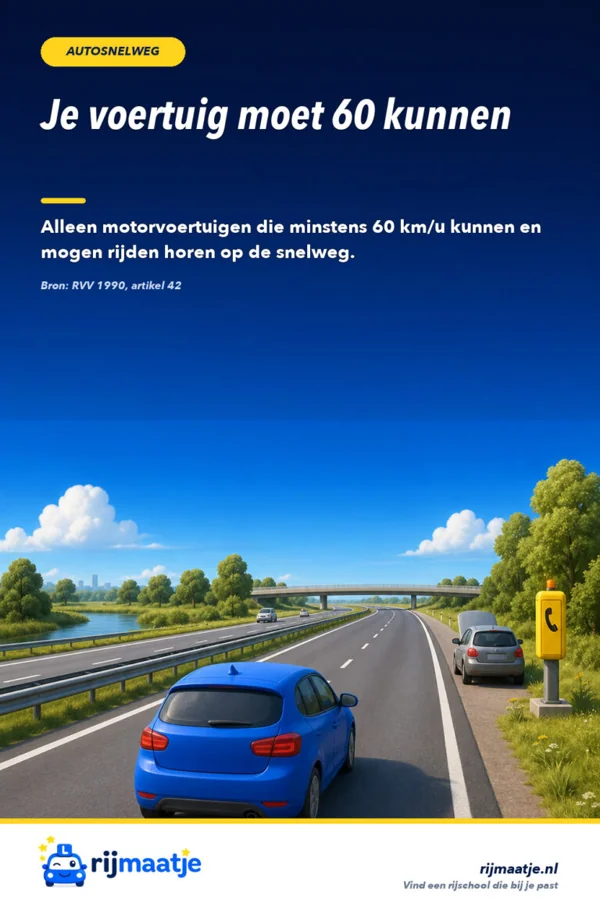
A motorway is intended for motor vehicles that are permitted and able to travel at least sixty kilometres per hour.
Read article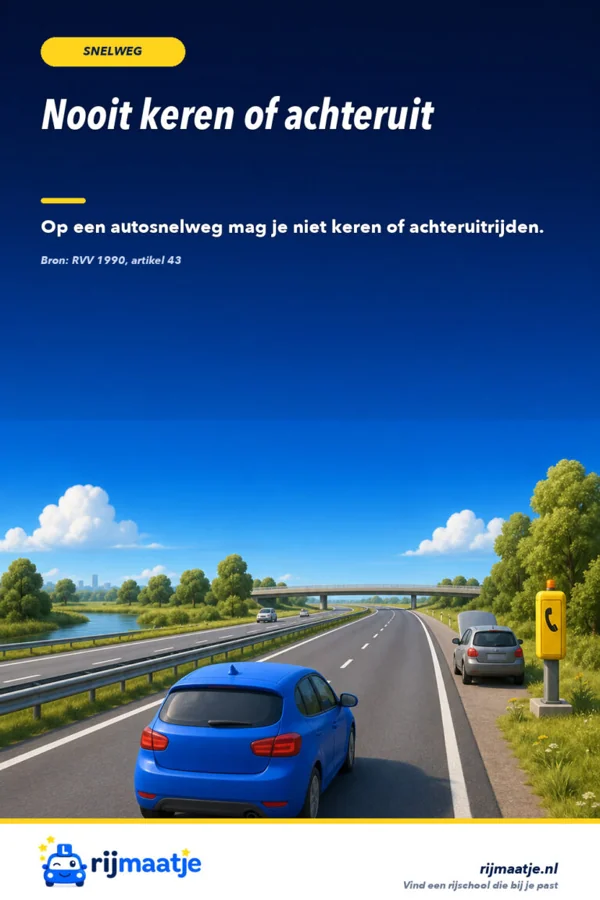
On a motorway, you must never turn around or reverse. If you miss an exit, continue to the next one and correct your route from there.
Read article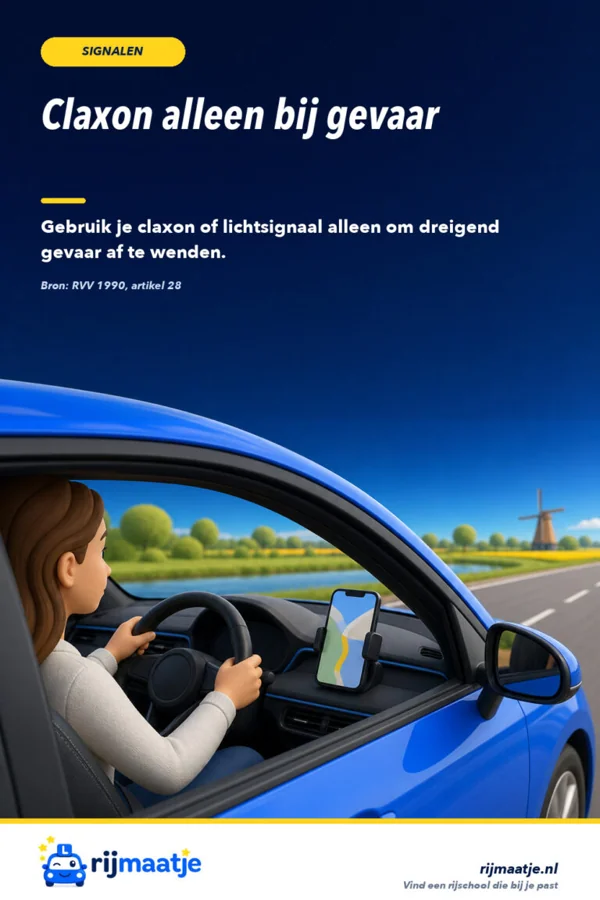
Use sound and flashing signals only to avoid imminent danger, not out of annoyance or as a greeting.
Read article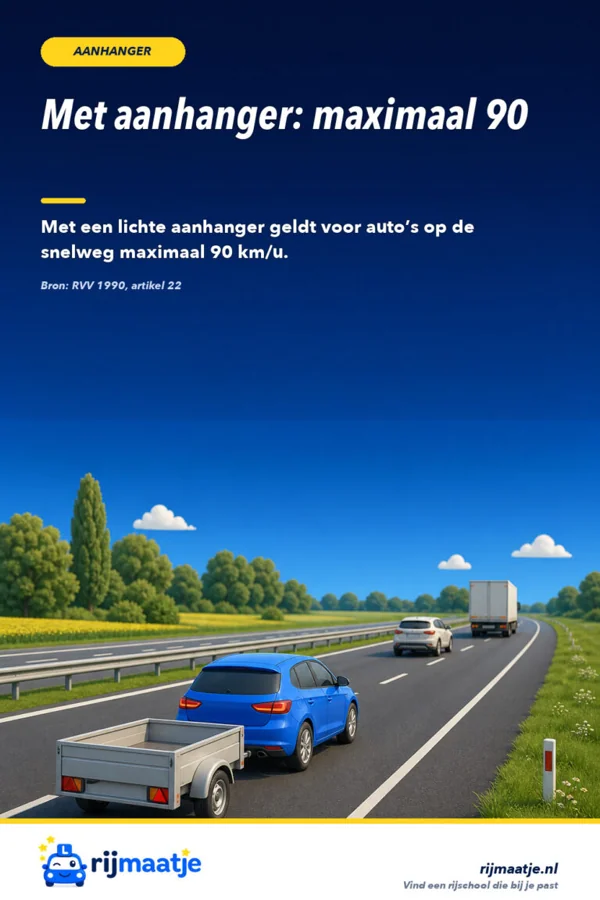
A passenger car with a trailer up to 3,500 kg maximum authorised mass may drive at a maximum of 90 km/h.
Read article